What Is a 4x4 Hair Closure? A Complete Guide for Buyers and Stylists

Quick Answer
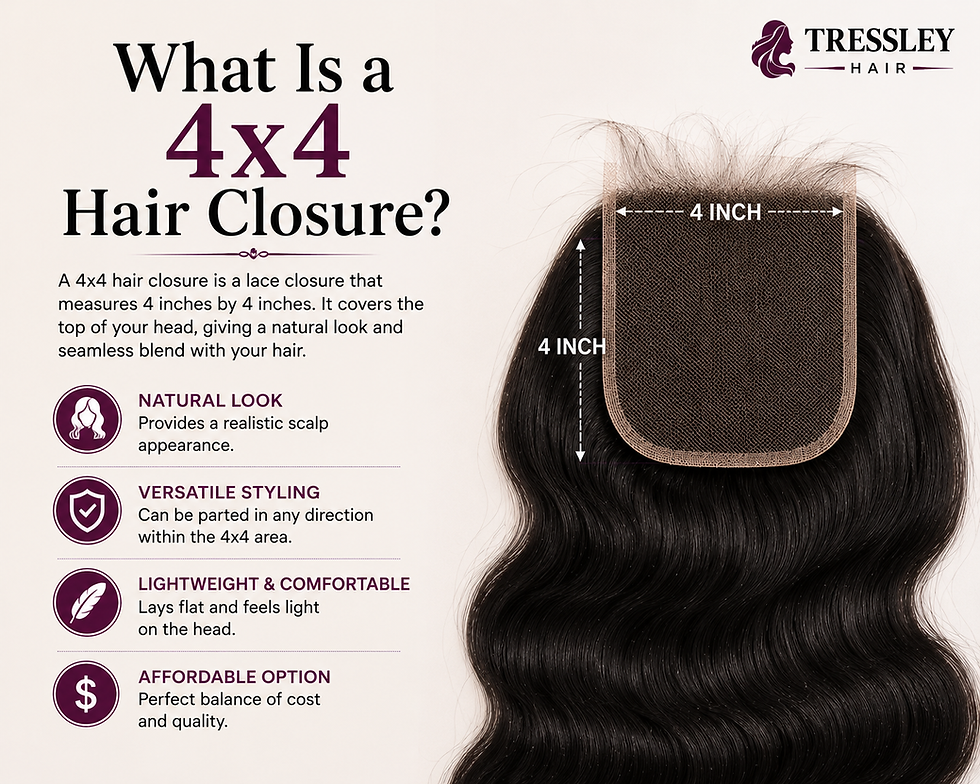
A 4x4 hair closure is a lace-based hairpiece measuring roughly 4 inches by 4 inches, with human hair hand-tied into the lace to mimic a natural scalp part. It sits at the crown or top of the head and is used alongside hair bundles in a sew-in install, or as the crown piece of a closure wig, to create a seamless, natural-looking part without leaving a section of the wearer's own hair or scalp exposed. Closures are smaller and generally less expensive than lace frontals, which cover the entire hairline from ear to ear. A 4x4 closure is often considered the standard, beginner-friendly size in the closure category, offering enough parting space for most everyday styles while remaining easier to install and maintain than larger closure sizes.
Key Highlights: What Is a 4x4 Hair Closure?
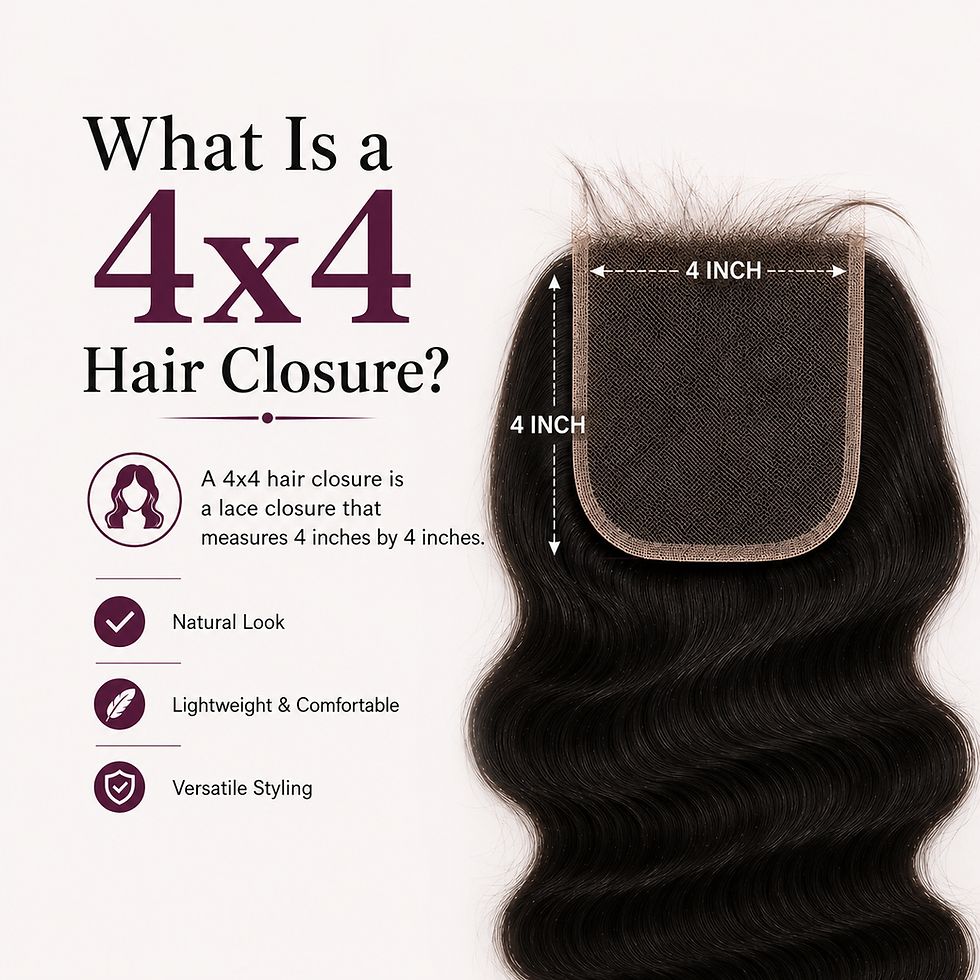
A 4x4 hair closure measures approximately 4 inches by 4 inches and covers the top and crown area of the head.
The hair is hand-tied into the lace one strand at a time, which is why closures cost more per square inch than machine-made wefts.
A 4x4 closure allows styling in any direction within its lace boundary, including middle, side, and diagonal parts.
Closures differ from frontals mainly in coverage area, with closures covering a smaller, more central section rather than the full hairline.
Lace grade, not just size, significantly affects how natural a 4x4 closure looks and how long it holds up to daily wear.
Proper adhesive use and patch testing matter for closure installs, according to documented dermatology research on wig and hairpiece adhesives.
A 4x4 hair closure is a small, square piece of lace, roughly 4 inches by 4 inches, with human hair hand-tied into it strand by strand. It sits at the top of the head, over a sew-in or wig cap, and creates the illusion of a natural, undetected part and hairline without leaving the wearer's own scalp exposed.
That short definition covers the basics, but it leaves out the details that actually matter when you are choosing, installing, or stocking one. This guide breaks down exactly what a 4x4 closure is made of, how it compares to other closure and frontal options, and what to check before you buy one, whether you are a stylist, an individual buyer, or a wholesale reseller.
The Basic Construction of a 4x4 Closure
Every 4x4 closure starts with a piece of lace mesh, typically Swiss lace, HD lace, or occasionally French lace, cut to the 4x4 inch dimension. Skilled workers then hand-tie individual hair strands into the tiny holes of that lace mesh, a process that takes considerably longer than machine-wefting hair onto a fabric strip.
This hand-tied construction is exactly why closures cost more per square inch than standard weft bundles. Each knot has to be placed and secured individually, and the density of those knots directly affects how full and natural the finished closure looks. A well-constructed closure distributes knots evenly and avoids visible bald spots or overly dense clumping, both of which are common quality issues in lower-grade products.
What "4x4" Actually Refers To
The numbers in "4x4" describe the lace piece's dimensions in inches, not the hair density, hair length, or hair quality attached to it. This is a common point of confusion for newer buyers, so it is worth stating clearly. A 4x4 closure and a 4x4 frontal both use the same size convention, but they cover different areas of the head entirely, which is explained further in the comparison section below.
Within that 4x4 inch space, wearers can create a part anywhere they like, a middle part, a deep side part, or a diagonal part, since the hair is tied throughout the entire lace piece rather than along just one predetermined line. This flexibility is the core selling point of any closure, regardless of its exact size.
Closure vs Frontal: Where a 4x4 Closure Fits
Closures and frontals both use lace and hand-tied hair, but they serve different purposes based on how much of the head they cover.
Feature | 4x4 Closure | Lace Frontal |
Coverage area | Top and crown, roughly 4x4 inches | Full hairline, ear to ear |
Parting flexibility | Any direction within the 4x4 space | Full hairline styling, including pulled-back looks |
Typical price | Lower | Higher |
Best for | Everyday wear, natural part styling | Versatile styling, edges left out, updos |
Installation complexity | Generally simpler | Requires more precise hairline blending |
A full guide to lace frontals covers the frontal side of this comparison in more depth, but the short version is that closures suit wearers who mostly want a natural part without needing to pull their hairline back into every style. Wearers who frequently style their hair away from their face, in high ponytails or slicked-back looks, generally get more practical value from a frontal's full hairline coverage than from a closure's smaller, more central footprint.
Lace Grade Matters as Much as Size
Choosing a 4x4 closure is not just about the size measurement. The lace grade underneath that hand-tied hair has a significant effect on how natural the finished piece looks and how it holds up over time.
Standard Swiss lace offers durability and a reasonably natural finish for most daily wearers. HD lace offers a thinner, more undetectable finish, particularly under bright lighting, but requires more careful handling since it is more delicate. A full breakdown of this distinction is covered in this guide to HD lace versus Swiss lace, which applies directly to choosing the right 4x4 closure for your specific use case.
How a 4x4 Closure Is Installed
A 4x4 closure typically installs through one of two main methods, and understanding both helps set realistic maintenance expectations.
Sew-in method. The closure is sewn onto braided natural hair alongside bundle wefts, distributing tension across braids rather than directly onto the scalp. This method tends to be gentler on natural hair over repeated installs.
Glue or adhesive method. The closure is attached directly to the scalp's perimeter using a bonding adhesive, offering a more seamless, glueless-appearing finish but requiring more careful skin preparation and removal.
Regardless of method, proper installation depends on accurately measuring the head and positioning the closure so its 4x4 inch coverage area aligns with where the wearer naturally parts their hair, since incorrect placement is one of the most common causes of an unnatural-looking result.
Skin Safety and Adhesive Considerations
Adhesive-based closure installs carry a real, documented skin safety consideration that deserves more attention than most product guides give it. A case report published through the National Institutes of Health documented a wig wearer who developed allergic contact dermatitis along the hairline after using a cyanoacrylate-based adhesive to secure a hairpiece.1 A separate peer-reviewed case linked a similar reaction to acrylate compounds found in a wig-fixing adhesive tape.2 A broader review of hair-product contact dermatitis confirmed that reactions along the hairline, exactly where a closure's lace edge meets skin, are a recognized and recurring pattern in dermatology practice.3
This does not mean closures are unsafe to wear. It means a patch test before full adhesive application is genuinely useful, not just cautious marketing advice. The American Academy of Dermatology recommends this same patch-test approach for any product applied directly to the scalp or hairline.4 Salon professionals installing closures for clients should also follow standard ventilation practices when working with bonding adhesives and solvents, consistent with occupational safety guidance for hair salons.5
Choosing the Right Density for a 4x4 Closure
Density refers to how much hair is tied into the lace, separate from the lace size itself. A closure that is too sparse can look thin and reveal more lace than intended, while one that is too dense can look unnaturally thick compared to the wearer's actual hair around it.
Most 4x4 closures are available in a range roughly from 130 percent to 180 percent density. Lower densities in this range tend to look more natural for wearers with fine or medium natural hair, while higher densities suit wearers seeking a fuller, more voluminous look or blending with thicker natural hair textures.
Common Mistakes Buyers Make With 4x4 Closures
Assuming closure size determines hair density or quality. Size, density, and lace grade are three separate specifications, and a supplier should be able to speak to all three independently rather than bundling them into one vague product description.
Choosing a closure size without measuring the actual parting area needed. A 4x4 closure may not provide enough coverage for wearers who frequently switch between drastically different part placements.
Skipping a patch test before full adhesive installation. This single step catches most adhesive sensitivities before they become a visible, uncomfortable reaction along the hairline.
Assuming all 4x4 closures from different suppliers are interchangeable. Lace grade, knot quality, and hair sourcing vary significantly between suppliers even when the size measurement is identical.
Caring for a 4x4 Closure
Closures require a slightly different care routine than full bundles, since the lace base is more delicate than the hair itself. Wash gently, working from the top down rather than scrubbing directly at the lace, and avoid pulling or stretching the lace while wet, since it has less structural give in that state.
Store the closure on a mannequin head or stand between wears to preserve the knot pattern and prevent the lace from creasing. The American Academy of Dermatology's general guidance on preventing extension and weave damage, including managing tension and limiting prolonged wear time, applies directly to closures as well, since the same underlying scalp and hair health principles carry over.4
Bleached Knots: Why This Detail Matters More Than It Seems
One detail separates a closure that looks obviously artificial from one that passes as a natural scalp: whether the knots have been bleached. When hair is hand-tied into lace, each knot naturally appears slightly darker than the surrounding hair, since the knot itself concentrates strands together at the root.
Bleaching those knots lightens them just enough to blend with the lace and the wearer's scalp tone, removing the small dark dots that would otherwise be visible along the part. Some suppliers pre-bleach knots before shipping, while others sell closures with natural, unbleached knots that require the buyer or stylist to perform this step separately. Buyers should always confirm which they are receiving, since bleaching knots after purchase requires a careful, targeted technique different from a full bleach service, covered in more detail in this guide to bleaching raw Indian hair.
Import and Customs Classification for Closures
Wholesale buyers importing 4x4 closures internationally should know that these products fall under a specific, well-established customs category. U.S. Customs and Border Protection has issued a formal tariff classification ruling confirming that human hair closures, along with wefts and frontals, are classified under Harmonized Tariff Schedule subheading 6704.20.0000, the same category covering wigs and similar articles made wholly of human hair.6
Knowing this classification in advance helps wholesale buyers estimate landed costs accurately and avoid unexpected clearance delays when importing closures at volume. This applies regardless of the specific size or lace grade of the closure being shipped, since the tariff classification is based on the product category rather than its individual specifications.
Closures for Protective Styling and Scalp Health
Beyond the styling benefit, closures serve a genuine protective function for wearers managing hair loss, thinning, or simply wanting to give their natural hair a break from daily manipulation. The American Academy of Dermatology notes that protective styles, including sew-ins with closures, can help shield natural hair from environmental stress and reduce daily styling demands, provided they are not installed with excessive tension or worn for excessively long stretches without removal.7
This makes 4x4 closures a popular recommendation specifically for clients recovering from traction alopecia or managing early-stage thinning, since the smaller coverage area of a 4x4 closure, compared to a larger closure or full wig, generally means less overall tension is applied to the surrounding natural hair during installation.
Buyer's Guide: What to Ask Before Purchasing a 4x4 Closure
Before committing to a 4x4 closure, whether for personal use or a bulk wholesale order, confirm the following with your supplier.
What lace grade is used, and can they verify it? Request close-up photos or a physical sample before committing to a bulk order.
What density options are available? Confirm the range offered so you can match density to your own or your client's natural hair thickness.
What hair is knotted onto the lace? Ask specifically whether the base hair is genuinely raw, single-donor hair, since this affects both appearance and longevity.
Is the lace pre-bleached at the knots, or will that need to be done separately? Bleached knots create a more seamless, scalp-like appearance and are worth confirming before purchase.
What is the expected wear lifespan of this specific closure grade? This helps set realistic reinstall expectations for yourself or your clients.
Wholesale Consistency: Why Sourcing One Supplier for Multiple Sizes Matters
Resellers building out a full closure catalog, spanning 4x4 through larger sizes, benefit significantly from sourcing all of them through a single, consistent supplier rather than mixing vendors across sizes. Lace color, hair texture, and knot quality can vary meaningfully between manufacturers, even when the size specification is technically identical.
A customer who purchases a 4x4 closure and later returns for a larger size expects the same lace tone and hair quality they experienced the first time. Inconsistent sourcing across sizes creates a real risk of mismatched repeat purchases, which can quietly erode customer trust even when each individual product is high quality on its own. Confirming that your wholesale supplier can deliver consistent quality across their full closure size range is worth verifying before building a catalog around multiple sizes from the same source.
Does Head Size or Shape Affect Which Closure Size You Need?
Standard 4x4 measurements work for most average head sizes and hairline shapes, but a few situations call for reconsidering the size choice before purchase. Wearers with a wider forehead or a naturally receding hairline sometimes find that a 4x4 closure's coverage area does not extend far enough forward to blend seamlessly with their actual hairline, in which case a larger closure or a frontal may serve them better.
Conversely, wearers with a smaller head circumference or a naturally narrow crown area sometimes find a 4x4 closure provides more than enough coverage, and a smaller custom size could reduce excess lace and improve overall comfort. Most suppliers offer standard sizing only, so custom measurements typically require a special order or a made-to-measure request submitted in advance, which is worth factoring into lead time expectations for a wholesale order intended for a specific client base.
The Bottom Line
A 4x4 hair closure is a small but genuinely versatile piece, and understanding its actual construction, from lace grade to knot density, helps you choose one that performs the way you actually expect rather than relying on size alone as a quality signal. Explore Tressley Hair's closures, backed by transparent sourcing standards, or request a wholesale quote to compare lace and density options before your next order.
Frequently Asked Questions
How much hair coverage does a 4x4 closure actually provide? It covers roughly the top and crown area of the head, enough for most everyday part styles, but it does not extend to the hairline the way a frontal does.
Can a 4x4 closure be dyed or bleached after purchase? Yes, with careful technique. The hair itself can be colored following standard raw hair bleaching guidelines, though the lace should be treated gently to avoid tearing during the process.
Is a 4x4 closure suitable for beginners installing their first sew-in? Yes. Its smaller size and simpler parting requirements generally make it easier to install and maintain compared to a full lace frontal.
How long does a 4x4 closure typically last with proper care? The lace foundation itself often needs replacing sooner than the hair, generally within 3 to 6 months of regular wear, depending on lace grade and handling.
What is the difference between a 4x4 closure and a lace front wig? A 4x4 closure is a standalone piece used alongside bundles or as the crown of a wig cap, while a lace front wig is a complete, pre-made unit with an entire cap and hairline built in.
Do all 4x4 closures use the same lace type? No. Suppliers offer 4x4 closures in different lace grades, including Swiss, HD, and occasionally French lace, and this choice significantly affects both appearance and durability.
Can a 4x4 closure be worn without any glue or adhesive? Yes, through the sew-in method, where the closure is stitched onto braided natural hair rather than bonded directly to the scalp with adhesive.
How does closure density affect the final price? Higher density closures require more hair to be hand-tied into the same lace area, which increases both material cost and labor time, generally raising the final price accordingly.


Comments